Description
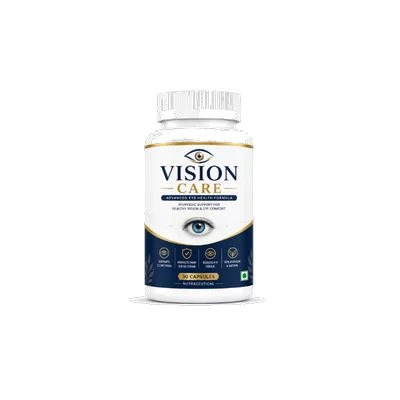
Vision Care is a nutraceutical capsule formula created to support eye health and visual comfort. It is intended for adults who want to include targeted nutritional support in their daily eye-care routine. The bottle contains 30 capsules for oral use.
Composition
Vision Care is a nutraceutical capsule formula for adults seeking nutritional support for eye health and visual comfort. The pack identifies it as an Advanced Eye Health Formula and contains 30 capsules for oral use. Exact ingredients and amounts are stated on the product pack; do not assume any active substance not listed there.
Dosage and usage
Vision Care capsules are taken orally with water according to the product directions. Choose a regular point in the day that is easy to remember, such as alongside a routine meal, and avoid doubling an intake after a missed dose.
Common-use habits that improve consistency include:
- Take the capsule at roughly the same time each day.
- Swallow the capsule with water unless a clinician has advised a different method.
- Continue prescribed eye drops, glasses, contact lenses, or eye-disease treatment as instructed.
- Record new symptoms, supplements, and medicines in one list.
- Stop use if a suspected allergic reaction occurs.
A missed capsule does not require catching up. Resume the usual routine at the next planned intake.
Practical tip: avoid starting several eye-health supplements on the same day. If nausea, rash, or stomach discomfort develops, it is much easier to identify the likely trigger when products were introduced one at a time.
How it works
Vision Care is a nutraceutical capsule formula designed to support normal eye physiology and visual comfort. Nutritional support cannot reshape the cornea, remove a cataract, lower raised eye pressure, or correct refractive error.
Indications
Vision Care may suit people whose work involves prolonged reading, computer use, close-detail tasks, or regular exposure to dry indoor air. Vision Care can be part of general eye health and care.
Comparison
Eyeglasses and contact lenses correct refractive errors by changing how light reaches the retina. Reading glasses may help age-related near-focus difficulty, while prescription eyewear corrects a measured refractive error.
Contact lenses need disciplined hygiene. Sleeping in lenses not designed for overnight use, topping up old solution, or rinsing lenses with tap water raises the risk of serious corneal infection. Nutritional support and optical correction serve different purposes, so one should not be expected to replace the other.
Contraindications
Vision Care is not for you if you have a known allergy to any component of the formula or have previously experienced a serious allergic reaction after taking a nutritional capsule.
Extra caution is appropriate in the following situations:
- Pregnancy or breastfeeding.
- Use of anticoagulants, antiplatelet medicines, diabetes medicines, or medicines with a narrow therapeutic range.
- Chronic kidney disease, liver disease, or a condition requiring restricted nutrient intake.
- Planned surgery or a procedure where the clinical team needs a complete supplement list.
- Ongoing treatment for glaucoma, diabetic eye disease, retinal disease, or inflammatory eye disease.
When this is not for you
Vision Care is not for you if you are seeking treatment for sudden vision loss, eye injury, severe pain, a chemical splash, or a diagnosed retinal or optic-nerve disease. These situations need prompt clinical care.
Side effects
Nutraceutical capsules are commonly well tolerated, though individual responses vary. Mild digestive discomfort can occur with dietary supplements, especially when several products are taken together or when a capsule is taken on an empty stomach.
Possible signs of sensitivity include itching, rash, lip swelling, wheezing, vomiting, or persistent abdominal pain. Stop using Vision Care and seek urgent medical help for swelling of the face or throat, trouble breathing, or widespread hives.
A capsule cannot be assumed to suit every medical situation. People using long-term medicines, managing liver or kidney disease, or following a clinician-directed nutrition plan should have their supplement routine reviewed for duplication and interaction risk.
Common mistakes
Several avoidable habits can undermine eye comfort and delay appropriate care.
- Using Vision Care as a substitute for a vision test when distant or near vision has changed.
- Continuing contact-lens wear through redness, pain, or light sensitivity.
- Assuming glaucoma always causes early pain or obvious blur.
- Wearing an outdated glasses prescription for headaches and then blaming screens alone.
- Combining multiple supplements with overlapping ingredients.
- Ignoring sudden flashes, a curtain-like shadow, or abrupt loss of sight.
- Stopping prescribed eye drops after a few symptom-free days.
One detail patients often miss is that glaucoma can progress quietly. Good central vision does not rule out peripheral visual-field loss.
What doctors say
In clinical practice, eye specialists often see people delay an eye examination because they assume blur is caused only by screen exposure or tiredness. Dryness and fatigue are common, but refractive error, cataract, glaucoma, diabetes-related retinal change, and medication effects can produce similar complaints.
A doctor would usually frame Vision Care as supportive rather than corrective. It may fit a steady wellness routine, especially for adults focused on healthy visual habits. It should not be used to judge whether a new visual symptom is harmless.
The strongest results come from matching the right intervention to the cause. Glasses correct optical focus. Eye drops treat selected surface or pressure-related conditions. Surgery addresses specific anatomical problems. A nutraceutical supports daily eye-health goals without replacing any of those treatments.